
If you are comparing a new vs used shipping container in NZ, neither option is automatically better. The right choice depends on what you need the container to do, where it will sit, how important appearance is and how much wear you are prepared to accept.
A new container is usually the better fit where presentation, a clean interior and a longer expected service life matter. A used container can be a sensible option for secure storage, farm gear, worksites and other practical jobs where cosmetic marks are not a concern.
Before requesting quotes, decide whether your priority is condition, budget, appearance, availability or a specific modification. That makes it easier to compare like-for-like container options.
What is the difference between new and used shipping containers?
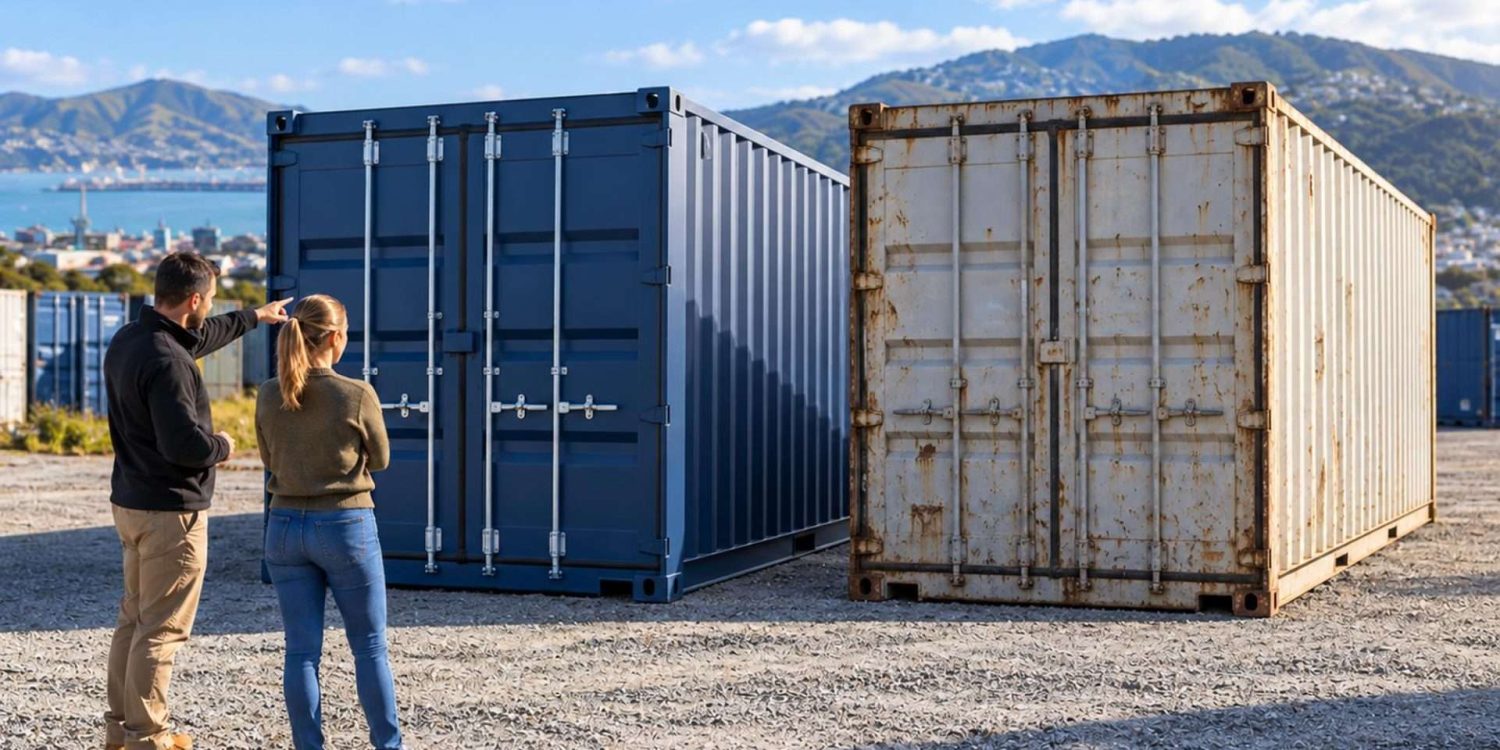
In container sales, a “new” unit commonly refers to a container that has made one cargo journey before being sold. You may also hear this described as a one-trip container. It is not necessarily factory-fresh in the way a new car is, but it will generally have had very limited use.
A used container has spent longer in shipping service and will show varying levels of wear. Its age, previous use, surface condition, floor condition, doors and repair history can differ from one unit to the next.
Both new and used containers are built for tough transport conditions. However, the condition you receive matters more than the label alone. A good quote should clearly describe the offered container’s condition and intended suitability for your use.
Choose a new container if appearance and condition matter most
A new or one-trip container is often the practical choice when the container will be visible at a home, retail site, office yard, customer-facing premises or a newly finished commercial development.
It can also suit buyers who want a cleaner starting point for a conversion or modification project. If you are adding shelving, lining, power, windows, doors or other features, beginning with a container in very tidy condition may make the finished result easier to achieve.
Common reasons to buy new
- You want the container to look tidy from day one.
- The container will be positioned where customers, neighbours or visitors will see it.
- You need a clean, dry storage space for stock, tools, furniture, archives or equipment.
- You are planning a container conversion and want a sound base for the work.
- You want to minimise visible dents, patches, rust marks and paint touch-ups.
- You expect the container to remain on site for a long time and want the best available starting condition.
New containers are not immune to cosmetic marks. They are moved by trucks, lifting equipment and ships, so minor handling marks can still occur. Colour and exterior finish can also vary depending on the units available at the time.
Things to consider before choosing new
The main trade-off is usually budget. A newer container will generally cost more than an older used equivalent, although the actual difference depends on size, type, condition and current supply.
Availability can matter too. If you require a particular container type, colour or location, ask what is currently available rather than assuming every option will be ready immediately. Container stock changes with imports, depot movements and demand.
Choose a used container when function matters more than finish
A used shipping container can offer excellent value when you need a lockable, weather-protected space and are comfortable with a more workmanlike appearance.
For many farms, trade businesses, construction sites and storage yards, the job is straightforward: keep gear secure and protected from the weather. In those situations, dents, paint wear and previous repairs may not affect the container’s usefulness.
Common reasons to buy used
- You need practical storage for tools, materials, machinery parts or site equipment.
- The container will be on a farm, rural property, worksite or back-of-yard location.
- Your budget needs to go further.
- You are happy to repaint or tidy the exterior later.
- You need storage quickly and are flexible about cosmetic condition.
- You are using the container as a base for a simple project rather than a polished finished space.
Used containers can be a strong choice, but condition should be discussed clearly. “Used” covers a broad range. One container may be relatively tidy, while another may have more visible repairs, surface rust, dents or worn paint.
What to check with a used container
Ask the supplier to explain the condition standard being quoted. For storage use, buyers commonly want confidence that the unit is wind and watertight, the doors operate properly and the floor is suitable for the intended load. If appearance matters, ask about photos of the actual container or representative stock before committing.
It is also worth thinking about access. A container can be structurally suitable for storage but still be inconvenient if the doors are hard to reach once it is placed on site. Plan for enough clear space to open the doors and move items in and out safely.
Compare containers based on your intended use
The quickest way to make the decision is to start with the job, not the container’s age.
Home storage
For household storage, a new container may be worthwhile if it is close to the house or visible from the street. If it will sit out of sight and hold garden equipment, furniture or general belongings, a tidy used option may be all you need.
Consider whether you need easy access to stored items. If you will be in and out regularly, door operation, placement and internal layout can matter just as much as exterior condition.
Trades and construction sites
Used containers are often a practical fit for tool and material storage on active worksites. They are built to handle a working environment, and cosmetic wear is usually less important where the container may be moved, bumped or exposed to mud and dust.
If the unit will also serve as a site office, client meeting space or branded storage point, a newer container may give a better first impression. The best choice depends on whether it is mainly a secure box for equipment or part of the site presentation.
Farms and rural properties
For farms, containers can be useful for storing feed-related gear, spare parts, fencing supplies, workshop equipment and seasonal tools. A used unit is often sufficient where it is positioned away from public areas and will be used hard.
Think about vehicle access and ground conditions before delivery. A container needs a suitable site and clear access for the delivery method being used. Wet ground, slopes, low branches, overhead lines, narrow gateways and soft paddocks can all affect placement.
Small businesses and commercial sites
For stock storage, overflow inventory, archives or equipment, a clean interior and professional appearance may carry more weight. A new container can suit businesses that need storage close to customers, staff or public-facing areas.
That said, used containers can still be appropriate for back-of-house storage where the priority is security and capacity rather than presentation.
Container modifications
If you are planning to modify a container, discuss the project before choosing the base unit. A newer container may be preferred for a polished retail, office or accommodation-style build. For a simple workshop, storage unit or utility space, a used container may be a cost-effective base if its condition suits the planned work.
Modifications can affect the container structure, weatherproofing, transport requirements and any approvals needed for your site. Get advice from suitably qualified people for the specific design and installation.
Budget: compare the total project cost
The purchase price is important, but it is not the only cost to consider. A lower-priced used container may be the right call if it meets the need without further work. On the other hand, a newer unit may reduce the amount of repainting, cleaning or cosmetic preparation you want to do.
When comparing quotes, look beyond the headline figure. Check what is included, the condition being supplied, delivery arrangements, access assumptions and any extras you need. If you are modifying the container, factor in the full cost of that work rather than judging the base container alone.
There is no universal rule that new is better value or that used is cheaper in every situation. Market supply, container type, location and demand can all affect current pricing and availability.
How long will a container last?
There is no reliable one-size-fits-all lifespan for a shipping container once it is placed on land. Its useful life depends on its starting condition, the local environment, drainage, maintenance, how it is used and whether it is regularly moved or modified.
Coastal exposure, standing water, poor site drainage and damage to paintwork can all increase the chance of corrosion over time. Keeping the container on appropriate supports, allowing water to drain away and addressing damage early can help protect it.
A newer container gives you a newer starting point. A used container may still provide many years of useful storage when it is in suitable condition and looked after properly. Ask about the condition of the particular unit rather than relying on age alone.
Do you need council approval?
Container placement and use can raise planning, building or site-specific questions, particularly for long-term installations, conversions, commercial use, boundary placement or services such as plumbing and electrical work.
Council requirements vary between areas and depend on the property, intended use and proposed work. Check with your local council and any other relevant professionals before ordering if approval may be required. This is general information, not legal or planning advice.
Questions to ask before you buy
- What will I store or use the container for?
- Does appearance matter at this location?
- Do I need a tidy, clean base for a conversion or fit-out?
- Am I comfortable with dents, paint wear and repair marks?
- What condition is included in the quote?
- Can I see photos of the actual unit or representative available stock?
- Is my site accessible for delivery and placement?
- Do I need to check council or landlord requirements first?
- Will I need any modifications now or later?
The practical choice
Buy a new container when appearance, a clean interior, a newer starting condition and a polished result are important. Buy a used container when you need reliable, secure storage and would rather put more of your budget into the wider project than the container’s finish.
The key is to be clear about the use case and realistic about condition. A used container should not be judged by the same cosmetic standard as a one-trip unit, and a new container is not always necessary for a hard-working storage job.
If you are weighing up options for a home, farm, worksite or business, request an estimate from Container Shop NZ with your intended use, preferred size, delivery location and any modification requirements. SEA Containers can then help you compare suitable current options based on what is available.